BookTok Romance Audio Stories — Built For The Tropes That Travel
Forced proximity. Morally grey. Dark romantasy. The dynamics BookTok has organised contemporary romance around — generated as audio for your specific brief.
Cast your story. We write and narrate it

What BookTok Has Actually Done To Romance
BookTok did not invent the romance trope, but it organised the entire contemporary genre around it. A reader can describe what she wants in three or four words — forced proximity, morally grey, slow burn, single dad — and another reader will know exactly the kind of story she is asking for, the kind of dynamic she expects to find in it, and the kind of resolution that will count as satisfying. The shorthand is not a marketing convenience. It is now the actual structure of how readers find each other and find books.
What this has done to the genre is to push it toward specificity. Readers know what they want with a precision that earlier generations of romance readership did not need to develop, because the discovery mechanism rewards precision. A general label — "romance", "contemporary romance" — is now too broad to be useful for finding the book a particular reader wants this week. The trope tag is the unit. The trope combo (forced proximity plus enemies-to-lovers, single dad plus second chance) is the unit at finer grain.
This is the situation a generated audio platform is built for. The catalogue model — produce a finite library, hope the available titles match — cannot meet the granularity of preference that BookTok has trained the contemporary reader to hold. A single fixed title can match the trope. It cannot match the trope, the dynamic, the chemistry register, the setting, and the intensity all at once unless the reader gets very lucky.
A model that generates the story from the reader's brief solves the problem at the level it actually exists. Set the trope, the dynamic, the archetype, the register. Mistral Large writes the story. The match is exact because the brief is the source. See personalised audio stories for how the brief becomes a story, or forbidden romance audio stories for one of the categories BookTok has done most to expand.
What BookTok Romance Actually Wants
The contemporary romance audience that has been shaped by BookTok wants specific things. Intensity is one — the reader is not asking for a softer or gentler version of the genre, she is asking for one that takes grown-up emotion and literary heat seriously. Character archetypes that travel are another — the morally grey love interest, the protector, the woman who knows what she wants, the man who has stopped performing. Dynamics with structure are a third — forced proximity, enemies to lovers, second chance, age gap, fake dating, single dad. The trope is the dynamic, and the dynamic is the story's engine.
What BookTok has been less able to provide is the matching of all these variables to the specific story a particular reader wants this evening. Recommendations work at the level of the title, not the level of the brief. The title that matches three of her four preferences is the closest she is likely to find, and the fourth preference is what she has had to compromise on. Over time the compromise is what the audience has noticed.
Generated audio meets the brief at full granularity. The trope, the archetype, the chemistry, the setting, the intensity, the dynamic between the two characters — all are choices made in the Casting Room before the story is written. Nothing is approximated, because nothing has been pre-built.
Why Audio Specifically, And Why Now
Romance has always had a strong audio audience. Audiobook romance is one of the largest categories in audiobook publishing, and the format suits the genre — the first-person voice carries the interiority that romance depends on, the narration delivers the emotional texture that text only describes. What audio has not been able to do, until generated narration arrived, is meet the specific brief of a particular listener at a particular moment.
The Private Story uses production-grade narration voices, multiple options selectable in the Casting Room. The voice carries the story for roughly ten minutes — long enough for a forced proximity arc to build, a morally grey dynamic to land, or a slow burn to reach a turning point. Short enough to fit an evening's listening session rather than requiring a serialised commitment.
The combination of trope-specific generation and production-grade audio is the format BookTok has been waiting for without quite naming. The audience that wants specific tropes wants them rendered as audio, in narration that takes the genre seriously, in stories generated for the brief rather than approximated from a catalogue. See audio stories for women for the principle at full literary intensity.
How The Generated Model Serves The BookTok Reader Specifically
The reader who has learned to describe what she wants in trope shorthand has, in effect, been preparing to use a generative platform for years. The Casting Room takes the same vocabulary the reader already uses — the trope, the dynamic, the archetype, the chemistry, the intensity — and produces a story from it. The reader is not learning a new system. She is using the system she already uses for finding books, but with the brief feeding directly into the writing rather than into a search engine.
What this changes about the reading practice is the relationship between desire and supply. The reader's specific brief no longer has to map onto an existing title. The brief produces the story directly. A trope combo that is genuinely rare — fake dating plus single dad plus dark romance, for example — is no harder to receive than a common combo. The model writes either with equal facility because the brief is the input.
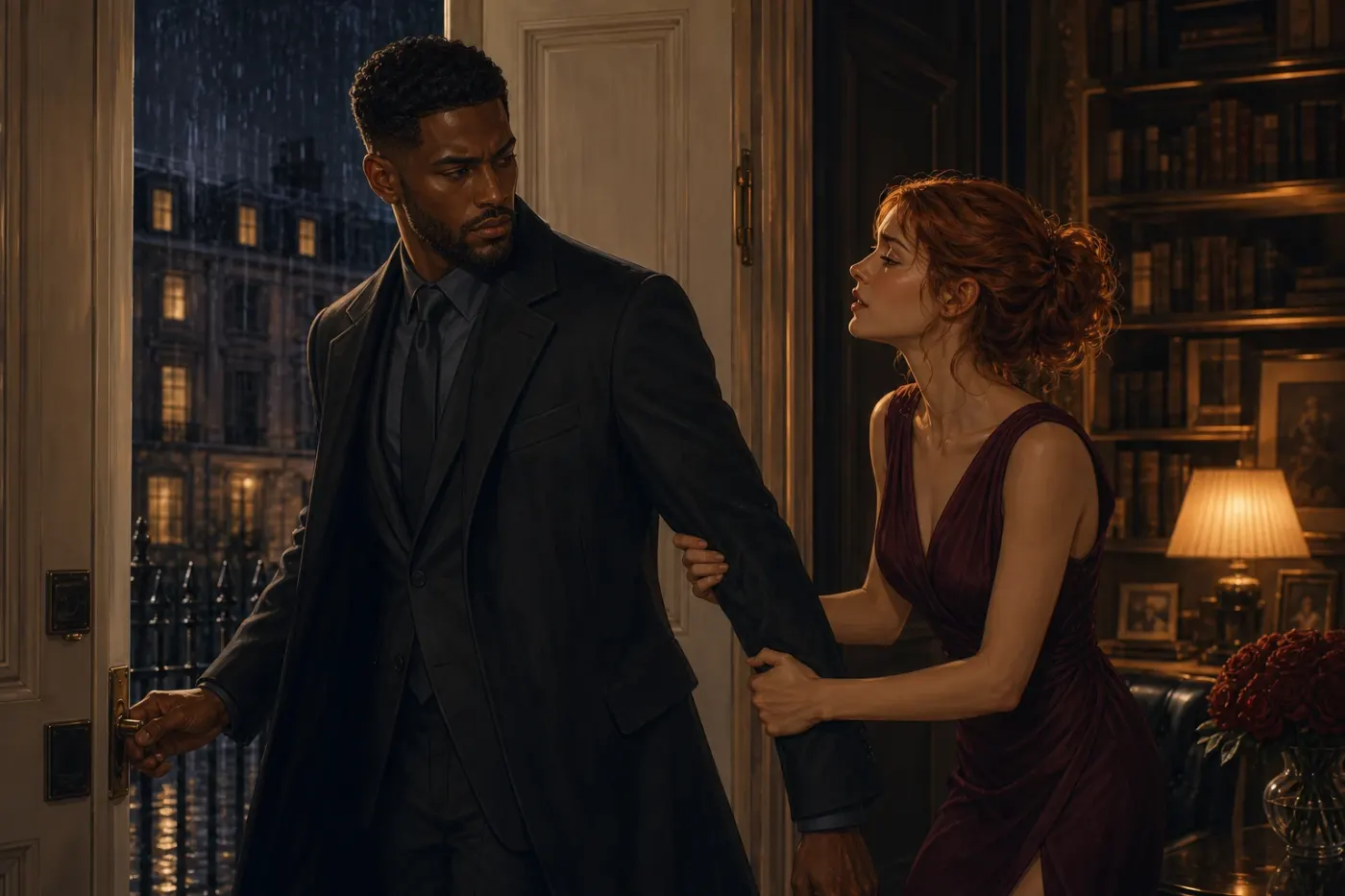
Three BookTok Briefs — Three Distinct Stories
The reader knows the trope she wants — forced proximity, fake dating, second chance — and she sets it as the primary structural choice. The other variables shape the texture, but the trope is the engine. The story is built around the structural mechanism the trope provides, with the dynamic and intensity calibrated to her brief.
Some BookTok readers organise less around the trope and more around the dynamic — the precise quality of the two characters' interaction, the chemistry register, the way she wants to feel inhabited. The Casting Room captures the dynamic as a primary variable, and the story is built around it, with the trope chosen to support the dynamic rather than the other way around.
The character archetype combinations that BookTok has built — the morally grey love interest with the woman who knows what she wants, the protector with the introvert, the experienced man with the woman whose youth is not her premise — are themselves a structural choice. The Casting Room treats the pairing of archetypes as a primary input, and the story is generated to do justice to both.
The brief is the source. The story is generated from it.
Ready when you are
A story made for you, in about a minute. Heard only by you.
Cast your romance →Why BookTok Readers Choose The Private Story
Single tropes, trope combos, and rare combinations are equally available. The brief is the input; the model writes from it.
The intensity is your choice and the story is built to honour it. From quietly charged to fully written wanting, the dynamic and the trope hold. Fade before the act.
Every story is generated fresh by Mistral Large. No closest-match, no approximation. The story did not exist before you described it.
Multiple voices selectable in the Casting Room, all chosen for the emotional and tonal range that contemporary romance requires.
A discrete listening session that fits an evening, rather than a serialised commitment that requires sustained scheduling. The form respects your time.
No social features, no public listening history, no recommendation feed shaped by what you choose. Privacy is structural, not a setting.

BookTok Romance Audio Stories — The Full Picture
BookTok organised contemporary romance around the trope and the dynamic, and the audience that has been shaped by it now describes what it wants with a precision that earlier generations of romance readership did not need to develop. The Private Story is built to meet that precision at the level the audience holds.
The Casting Room captures the brief at full granularity — the trope, the dynamic, the archetype, the chemistry, the intensity, the setting. Mistral Large writes the story for your specific session. The narration is production-grade, the form is roughly ten minutes, and the story is saved to your private account.
What the model does for the BookTok reader specifically is to remove the gap between the brief and the supply. The reader who knows what she wants no longer has to find a title that matches her preferences closely enough. She describes the brief, and the story is written from it.
Last updated: April 2026.
Create your story in the Casting Room — built around the trope, dynamic, and register you set.

How It Works
Choose the trope or trope combo, the dynamic between the characters, the archetype each one fits, the chemistry register, and the intensity. The Casting Room captures the brief at the granularity BookTok has trained you to hold. Begin in the Casting Room.
The story is generated for your specific session by the model — original to you, written for your trope combo, your dynamic, and your register. No catalogue, no approximation, no closest-match.
Narrated in the voice you selected, saved to your private account, accessible only to you. No social layer, no public history. The story is yours.
Frequently Asked Questions
What does BookTok romance actually mean as a category?
BookTok romance is contemporary romance organised around tropes and character dynamics rather than around individual titles or authors. The audience uses trope shorthand — forced proximity, morally grey, slow burn, single dad — to describe what it wants and to find what it wants. The category is not a sub-genre of romance; it is the contemporary structure of how the genre's readers communicate and discover.
Can I set trope combos rather than single tropes?
Yes. The Casting Room captures multiple inputs at once — the structural trope, the chemistry register, the archetype, the dynamic, the intensity. Combinations are the norm rather than the exception, and rare combos are no harder to generate than common ones, because the model writes from the brief rather than retrieving from a catalogue.
What intensity can I choose in a BookTok-style story?
You set the intensity register. The contemporary romance audience that BookTok shaped is asking for fiction that takes grown-up emotion and grown-up intensity seriously. Intensity is a Casting Room choice, and the story is generated at the level you set — from atmospheric and charged through to literary romance that still fades before the act.
How long is a typical story?
Around ten minutes, depending on voice selection. The form is calibrated to a discrete listening session — long enough for a forced proximity arc to build or a morally grey dynamic to land, short enough to fit an evening rather than a serialised commitment.
Are stories adapted from books that BookTok has surfaced?
No. Every story is original, written by Mistral Large from your specific brief. Nothing is adapted from existing copyrighted works, and no narratives are retrieved from a library. The story exists because you described it, and only because you described it.
Is listening private?
Completely. Stories are saved to your private account and accessible only to you. The Private Story has no social features, public listening histories, or recommendation engines that expose what you listen to. Read the full privacy commitment.
What voices are available?
Multiple production-grade narration voices are selectable in the Casting Room, with registers chosen for the emotional and tonal range that contemporary romance demands. You select the voice before the story is generated, and the narration is produced specifically for your story in that voice.
How is this different from looking for a book on BookTok?
BookTok is a discovery mechanism for existing titles. The Private Story generates a new story from your brief — there is no existing title to find, because the story did not exist before your session. The two practices serve different needs. BookTok helps you find what already exists; The Private Story produces what does not yet.
Create Your BookTok Romance Story
The trope you wanted. The dynamic you described. The intensity you set. An original audio story generated for your brief by Mistral Large, narrated in the voice you chose, saved to your private account.
Under two minutes to set the variables. A ten-minute story to listen to.
Enter the Casting RoomForbidden romance audio stories · Forced proximity romance audio stories · Audio stories for women · Romantic audio stories
Cast your story. We write and narrate it
Explore Related
Personalised audio stories · Private audio stories · Create your own audio story · Discover all story types