Fake Dating Romance Audio Stories — When the Pretence Becomes the Permission
The arrangement was supposed to be a favour. The plus-one for the wedding, the date for the work event, the partner for the family lunch. The script was clear. What neither of you wrote down was what the script would license.
Cast your story. We write and narrate it

Why Fake Dating Is the Trope That Refuses to Date
Fake dating has been a romance staple long enough to have outlived several waves of fashion, and the reason is structural rather than incidental. The premise does something specific: it gives two characters a complete, plausible reason to behave as if they are in a relationship while telling themselves that the behaviour does not count. Hand-holding for the sake of the audience. The arm at the small of her back because the cousin is watching. The sustained eye contact that would be unbearable as honesty and is comfortable as performance. Everything that intimacy actually consists of, performed under cover of the agreement that none of it means anything.
The mechanism is permission. In a culture where grown-up attraction often has nowhere to go without a series of stated social moves — the asking, the accepting, the named decision to begin — fake dating offers a side door. The relationship is already named. The roles are defined. The permission to behave as a couple is granted by the fiction itself. What develops underneath does not need to be requested, because the structure has already approved it.
This is why the trope keeps producing readable fiction even when other premises have aged out. The pretence is a stress test for what the characters actually feel. Each time they enact the arrangement — the wedding, the dinner, the introduction to the parents — the gap between the script and the truth narrows by another notch. By the time the arrangement is meant to end, the gap has often closed entirely, and the only question left is whether either character will be the first to admit it.
Fake dating romance audio stories work because the first-person voice carries the strain of the pretence in a way that text cannot fully render. The listener hears the rationalisation forming, the small adjustments to the official account, the moments where she catches herself responding to him as if the arrangement were the truth and has to remember to step back from it. The voice is doing the work of holding the fiction in place — and the listener hears, before the narrator does, when the fiction stops holding.
The Architecture of the Agreement
Every functional fake dating story is built around a real pressure that the arrangement is meant to relieve. The wedding where she cannot arrive alone again. The work event with the colleague whose curiosity has become intrusive. The family lunch where the question about her relationship status is going to be asked twice and answered honestly will be a fresh disaster. The arrangement is not whimsy. It exists because the alternative is worse, and the worseness is specific.
This specificity is what gives the trope its emotional grip. The arrangement is not a romantic premise — it is a logistical one. It begins as a problem to be solved, and the solution happens to involve sustained close behaviour with another person. The fact that the solution will produce intimacy is not anticipated by either party at the moment of the agreement. They are solving the wedding, not solving themselves.
Audio fiction inhabits this beginning precisely. The narration captures the moment of the request — the practical framing, the brisk negotiation of terms, the agreement to keep things simple. The voice does not anticipate what is coming. The listener, who knows the trope, hears what the narrator does not yet hear: the careful tone in which she is keeping the request neutral, the slight pause before he agrees, the precision of the terms that suggests both of them are aware, on some level, that the terms will need to be precise.
The architecture matters because it is what the story ultimately tests. The agreement was a structure for managing a specific situation. What grew within it is something the structure was not designed to contain. The ending of the arrangement is the ending of the cover — and what is left, when the cover is gone, is the question the story has been quietly building toward all along.
The Specific Charge of Performed Intimacy
The middle section of any well-built fake dating story lives in the gap between behaviour and feeling. The hand on her waist for the photograph is supposed to be performance. The way it lands, the way she registers it, the way he leaves it there a half-second longer than the photograph required — none of that is in the script, and all of it is happening anyway. The arrangement does not specify whether the intimacy is real. It only specifies that it must look real. What it looks like and what it is have begun, quietly, to converge.
This is the specific romantic register of fake dating fiction. Not the landing, which often arrives late or implied, but the long preceding stretch in which both characters are performing a closeness that is steadily becoming the truth. The performance does not need to be exaggerated for the story to land. The smaller the gesture, the more the gap between its official meaning and its actual weight does the work. A hand briefly taken in front of the cousin is not, in itself, a romantic moment. It becomes one because of what it cost her not to register what it felt like.
First-person audio narration is the right form for this register because the voice is constantly negotiating the gap. The narrator is telling the listener what just happened in the voice of someone who is also, in the same moment, telling herself that what just happened did not have weight. The story lives in the strain between those two accounts. By the time the strain becomes intolerable, the listener has been inside it for the entire build.
The Private Story creates fake dating romance audio stories that take the gap seriously. The arrangement is built with specificity. The performance is rendered with attention. The slow conversion of the script into the truth is the work the story does, sentence by sentence, until there is nowhere left for the official account to stand.
Where Fake Dating Sits Among the Trope Cousins
Fake dating shares territory with several adjacent romance structures, and the differences matter for what kind of story you are actually building. Forced proximity creates intimacy through circumstance — the shared space removes the option of distance. Fake dating creates intimacy through agreement — the shared script provides the permission for closeness that distance would otherwise enforce. The mechanisms are different. The texture of what builds is different.
Slow burn is often present in fake dating but is not the same trope. Slow burn describes the pacing of the romantic resolution. Fake dating describes the structural premise that creates the conditions for that pacing. A fake dating story that does not invest in the long, performed middle is not really doing the trope. The premise asks for accumulation; rushing past it forfeits what the structure makes available.
Office romance and fake dating intersect frequently because the workplace is one of the most reliable sources of plausible reasons to need a partner — the conference, the work event, the colleague whose pity has become its own pressure. But the workplace context adds a distinct register: the professional cost of the arrangement being misread, the layered difficulty of two colleagues who must continue to work together once the arrangement ends.
The Private Story creates stories across the full territory. You specify the precise pressure that calls for the arrangement, the prior relationship between the two people, the social context the script must perform inside, and the kind of intimacy the performance produces. The story is built around your specific brief — not around a generic version of the trope.
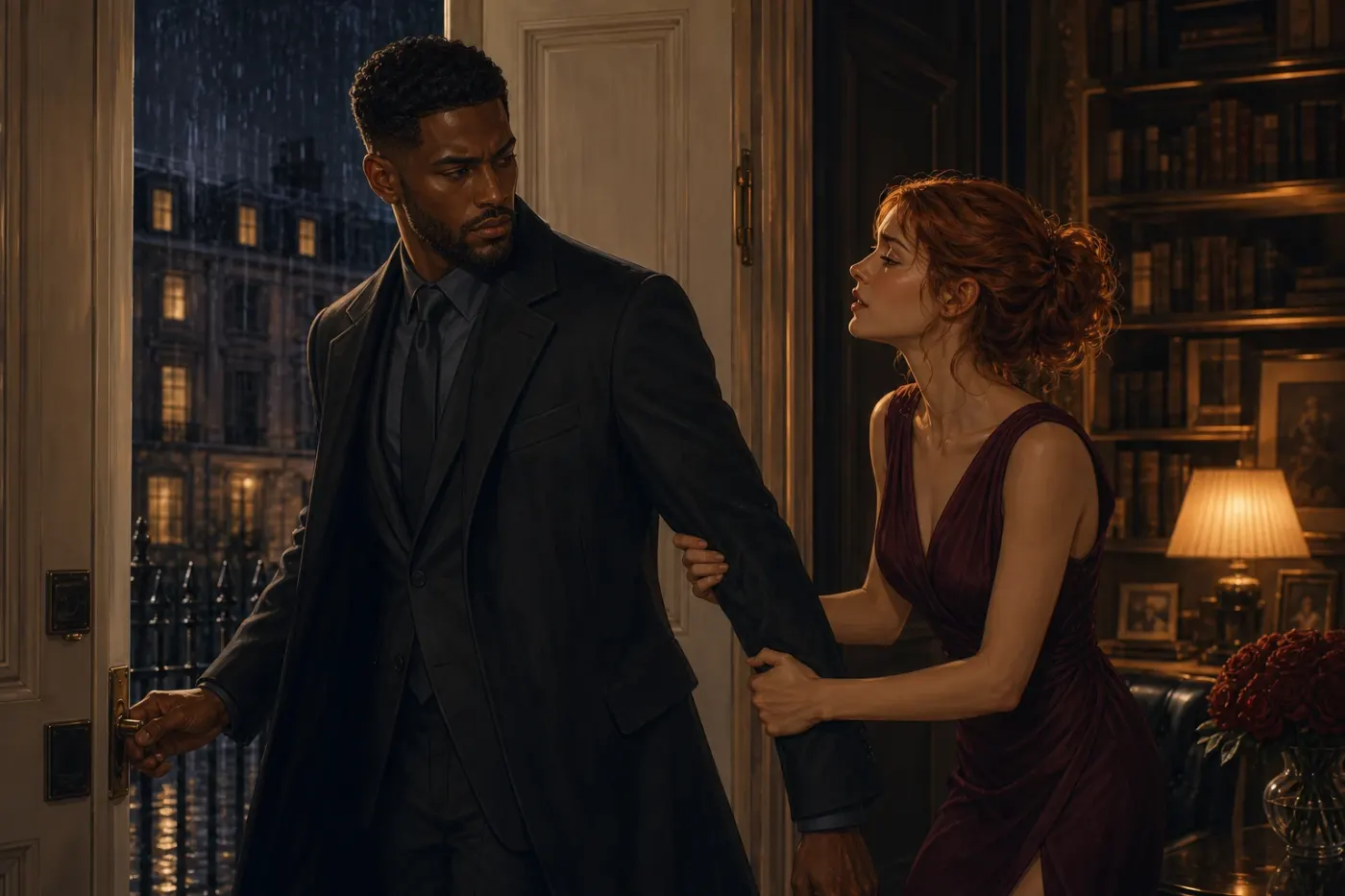
Three Fake Dating Stories — Three Different Pressures
The arrangement is always specific to the situation it is solving. These are starting points; the story is built around the brief you bring.
It is the third wedding this year. The same questions waiting in the same uncles. The same cousin who will pretend not to be asking the same thing. She asks him because he is the one person whose presence could plausibly silence the table and whose agreement to do this can be negotiated as a favour. The terms are clear. The behaviour required is bounded. What neither of them anticipates is what the table will see, in the way he listens to her tell a story she has told before, and what she will see, in herself, watching him listen.
The conference is in three weeks and the senior colleague has been asking questions she has run out of polite ways to redirect. The arrangement is professional in framing — a colleague himself, someone who understands the request, terms that protect both of them. The performance is meant to be brief and unremarkable. What the long evening produces, between the panels and the dinner and the bar afterwards, is not in the brief. The conference ends. The arrangement is supposed to end with it.
The lunch is at the parents' and the question is going to be asked. He is the one person whose presence she can explain in a sentence and whose composure she trusts at a table that does not always reward composure. The arrangement is for the afternoon. He arrives at the door. The mother opens it. From the second sentence onward, the story is what neither of them planned for — the way the script adapts itself, the way the role he is playing turns out to ask for things the agreement did not specify, and the long drive home afterwards where the script is no longer needed and neither of them turns the radio on.
You shape the pressure, the prior relationship, and the terms of the arrangement. The story inhabits the gap that opens once the performance begins.

Ready when you are
A story made for you, in about a minute. Heard only by you.
Cast your romance →Why Fake Dating Audio Works
The arrangement provides cover for behaviour that intimacy would otherwise have to request explicitly. The story can invest immediately in the closeness, because the structure has already approved it.
Fake dating earns its endings through the long performed stretch. The story is built to invest in the accumulation — the gestures that turn out to weigh more than the script intended.
Audio narration in first person renders the gap between performance and feeling from inside it. The listener hears the rationalisation forming, the small adjustments, the moments where the official account is about to fail.
The pressure that calls for the agreement, the prior relationship, the social context, the terms — you set the variables, and the story is built around what they produce.
Literary romance with the intelligence the trope requires. The arrangement is taken seriously as a structure rather than as a comedic device. The intimacy that develops is real because the writing earns it.
Saved to your private account and audible only to you. No social layer, no public history. Privacy is structural, not a setting you have to find.

Fake Dating Romance Audio Stories — The Full Picture
Fake dating endures as a romance trope because it does the one thing that other premises struggle to do without contrivance: it grants two characters a complete, plausible reason to behave as a couple while telling themselves the behaviour does not count. The structure is the permission. What develops within it is the story.
Fake dating romance audio stories at The Private Story are built around this principle. The creation flow allows you to specify the specific situation that calls for the arrangement, the prior relationship between the two people, and the social context the performance has to occupy. The story is generated to invest in the long middle — the stretch where the script is being followed and quietly stopping being a script.
Audio is the right form for this trope because the first-person voice is doing the same work the narrator herself is doing: holding the fiction in place. The listener hears every place the holding becomes effortful, every gesture that lands harder than the arrangement intended, every moment where the official account begins to thin. By the time the arrangement is supposed to end, the listener has been inside the gap between performance and truth for the entire build.
What separates a strong fake dating story from a weaker one is investment in the specific texture of the performance. Not the dramatic moment of acknowledgement at the end — the small, accumulating evidence that the script has been overtaken by the truth long before either character is ready to say so. The Private Story creates stories that take the accumulation seriously.
Last updated: April 2026.

How It Works
The wedding, the work event, the family lunch — the specific situation the arrangement is solving for. The prior relationship between the two characters, if any. The terms they negotiate at the start. Begin in the Casting Room.
An original fake dating narrative built to inhabit the long, performed middle — the gestures that were supposed to be script and turn out to be truth, the rationalisation that holds and then thins. Generated for this session by Mistral Large, narrated in the voice you select.
Saved to your private account and audible only to you. No social features, no recommendation feed, no visible history. The kind of story that lives in the gap between performance and feeling suits a listening experience that belongs entirely to you.
Frequently Asked Questions
What is fake dating in romance fiction?
Fake dating is a romance structure built around a stated arrangement between two characters to perform a couple-relationship for a specific external reason — a wedding, a work event, a family obligation, a social pressure that having a partner is meant to relieve. The structural feature is that both characters are aware the relationship is performed; the romantic development happens within and against the performance, as the gestures the script requires turn out to weigh more than the script intended. The trope is durable because the structure provides plausible permission for sustained intimate behaviour, which gives the story room to invest in accumulation.
How is fake dating different from forced proximity?
Forced proximity creates intimacy through circumstance — the shared space removes the option of distance, and what develops happens because the characters cannot avoid each other. Fake dating creates intimacy through agreement — the shared script grants permission for behaviour that distance would otherwise require, and what develops happens because the structure has already approved it. The two often appear together, but the underlying mechanism differs. Forced proximity is about the absence of an exit. Fake dating is about the presence of a permission.
Does the trope work in audio?
Particularly well, because the first-person voice carries the strain of the performance in a way that text cannot fully render. The narrator is telling the listener what is happening while also, in the same moment, telling herself that what is happening does not count. The story lives in the gap between those two accounts, and the voice is constantly negotiating it. Audio is the form that makes the negotiation audible — the careful tone, the slight hesitation, the moment where the official account thins. The trope and the medium are well matched.
Can I specify the situation the arrangement is solving?
Yes. The Casting Room lets you set the specific external pressure that calls for the arrangement — the wedding, the work event, the family obligation, the colleague whose questions need a definitive answer. You can specify the prior relationship between the two characters, the social context the performance has to occupy, and the terms they negotiate at the start. The story is built around the brief you bring, not around a generic version of the trope.
Is fake dating always a slow burn?
Most well-built versions are, because the trope's strength lies in accumulation. The performed middle — where the gestures the script required start to weigh more than the script intended — is what the structure is for. A fake dating story that resolves quickly forfeits what the premise makes available. The Private Story creates fake dating audio that invests in the long stretch between the agreement and the moment the agreement is no longer needed.
How long is a typical story?
Stories at The Private Story are typically around ten minutes, depending on the voice you select. The length is sufficient to establish the arrangement, inhabit the performed middle properly, and arrive at the moment where the script becomes the truth. Fake dating stories are built to use the time on the accumulation rather than on plot mechanics — the form benefits from the focused length.
Are the stories private?
Completely. Stories are saved to your private account and audible only to you. The Private Story has no social features, no public listening history, no recommendation feed, and no review system. The structural privacy is not a setting you have to find — it is built into the platform.
How do I create a fake dating story?
In the Casting Room you choose the pairing, the chemistry, the character archetype, the setting, the emotional intensity, the mood, and the situation. To create a fake dating story, select a situation involving an arrangement or pretence — or use the detailed situation selector to specify the exact pressure that calls for the agreement. The story is generated around your choices and narrated in the voice you choose. Creation takes under two minutes; the story is ready shortly after.
Create Your Fake Dating Story
The arrangement was supposed to solve the situation. The performance was supposed to be bounded. What grew underneath the script was not in the agreement, and is not going away when the agreement ends.
Specify the pressure, the prior relationship, the terms of the arrangement, and the social context the performance has to occupy. The story is built around what the structure makes possible — and around what the structure quietly fails to contain.
Create your fake dating storyForced proximity romance audio stories · Office romance audio stories · Slow burn audio stories · Audio stories for women
Cast your story. We write and narrate it
Explore Related
Personalised audio stories · Private audio stories · Create your own audio story · Discover all story types