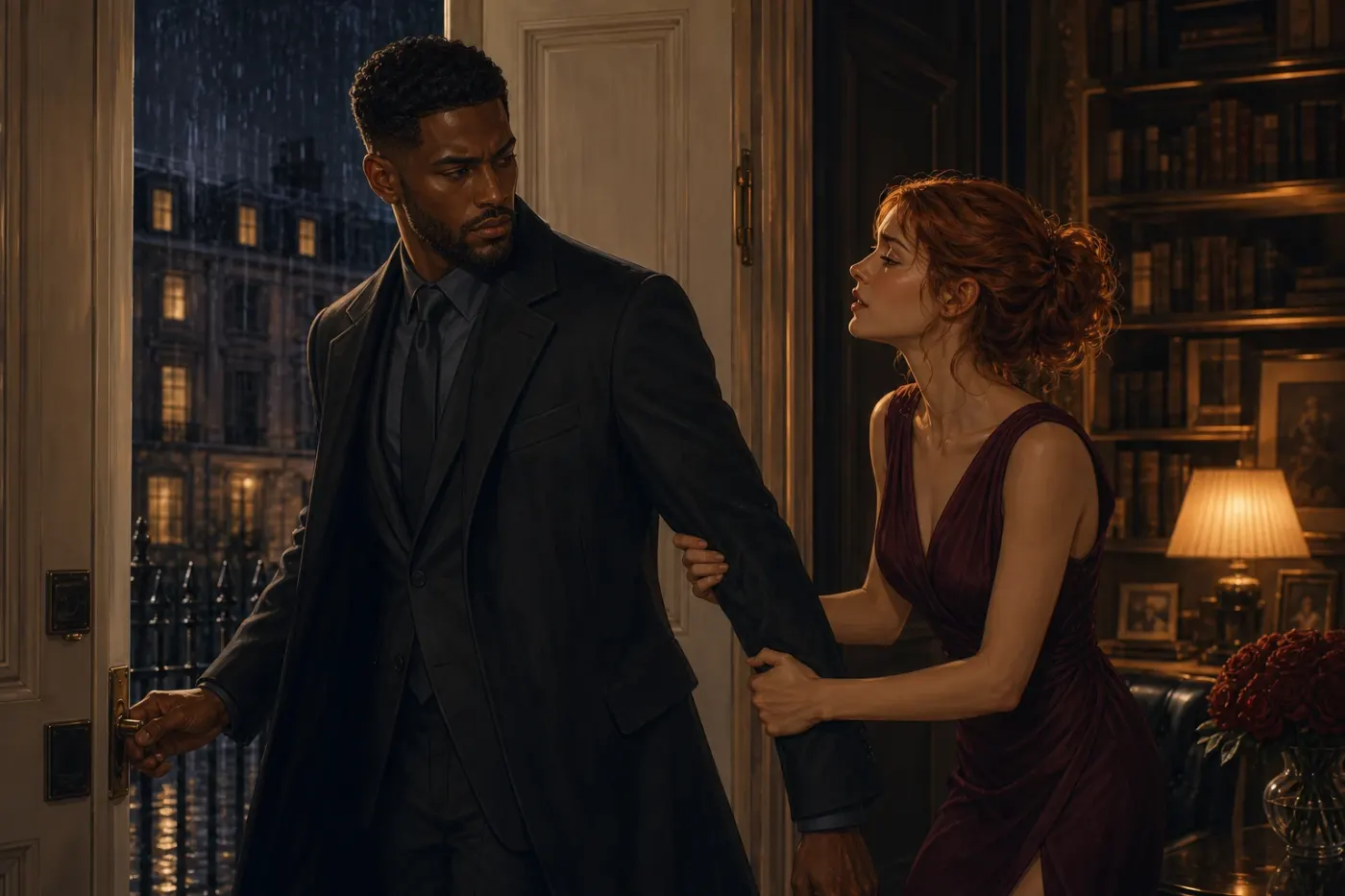
What Is Enemies-to-Lovers?
The romance trope built on a simple, electric premise: the person you hate most is also the person you cannot stop thinking about.
Where does your story begin?
Definition
Enemies-to-lovers is a romance fiction trope in which the central relationship begins in a state of active antagonism — the two characters dislike, oppose, or compete with each other — and gradually transforms into romantic and/or sexual attraction. The tension generated by the conflict fuels the chemistry, making the eventual resolution more satisfying.
Why enemies-to-lovers is the most popular romance trope
Enemies-to-lovers consistently ranks as the most requested romance trope in reader surveys and on fiction platforms. Its appeal is structural: conflict generates tension, tension generates desire, and desire is the engine of romantic fiction. When two characters actively antagonise each other, every interaction is charged. The reader or listener knows where this is going — but the journey is the point.
The trope also offers something rare in romance: both characters have to change. The enemies-to-lovers arc requires each character to revise their understanding of the other, which creates genuine character development rather than simple attraction. The relationship feels earned in a way that immediate chemistry does not.
The psychology behind enemies-to-lovers attraction
There is a well-documented psychological phenomenon called 'misattribution of arousal' — the tendency to interpret physiological arousal from one source (conflict, fear, excitement) as attraction to a nearby person. This may partly explain why antagonism between characters reads as erotic potential. In fiction, writers exploit this deliberately: the conflict creates physical and emotional agitation, and the reader's imagination translates that agitation into desire.
Enemies-to-lovers also provides the cognitive satisfaction of resolution. The antagonism is a puzzle; the romance is the solution. When the two characters finally give in, the reader experiences not just romantic satisfaction but the pleasure of a narrative problem resolved.
Enemies-to-lovers vs rivals-to-lovers vs frenemies-to-lovers
These variants are closely related but have distinct flavours. Enemies-to-lovers implies genuine antagonism — the characters may actively harm or oppose each other. Rivals-to-lovers (sometimes called 'rivals' or 'competition romance') involves two characters competing for the same goal, with mutual respect beneath the competition. Frenemies-to-lovers involves two characters who are outwardly friendly but secretly (or privately) in tension. All three are slow burn by nature, but the intensity of the original conflict varies.
Enemies-to-lovers in audio stories
The trope translates exceptionally well to audio format. Narrated dialogue — particularly terse, charged exchanges between characters who are pretending not to want each other — is one of the most effective tools in audio storytelling. The listener hears the subtext in the narrator's voice. The pause before a cutting remark, the breath that follows an accidental touch — audio makes these moments more visceral than text.
Slow burn romance and enemies-to-lovers are the most frequent combination requested at The Private Story.
Requesting enemies-to-lovers in your personalised story
When creating your story brief at The Private Story, you can specify enemies-to-lovers as the core trope and combine it with other preferences: slow burn pacing, dark romance tone, specific character archetypes (a cold, brilliant antagonist; a rival in a professional setting), and your preferred level of explicitness. The story will be constructed to honour the trope's essential structure — genuine antagonism that transforms through charged interaction.
See also personalised audio stories and AI romance stories for women.
The emotional arc of enemies-to-lovers in audio format
Reading enemies-to-lovers and listening to it are meaningfully different experiences. On the page, you track the subtle shifts in how a character is described — the language around the antagonist softening over chapters, the interiority of the protagonist becoming more ambivalent, the reader noticing changes before the characters acknowledge them. Audio creates a different version of this: the narrator's voice carries the emotional temperature of the scene, and the listener tracks the shift in feeling through tone rather than language.
A voice that is sharp and cold in early scenes, then hesitant, then fractured — that trajectory is felt differently than reading equivalent descriptions. The moment when an antagonist becomes something else registers in the narrator's voice before any explicit statement is made. This is why enemies-to-lovers is particularly well-suited to the audio format: the emotional intelligence of narration can carry the shift with a subtlety that description alone cannot always manage. Explore enemies-to-lovers audio stories to see this in practice.
Combining enemies-to-lovers with other romance tropes
Enemies-to-lovers rarely appears alone. It is one of the most combinable tropes in romance fiction, working naturally alongside slow burn (the antagonism extends the delay before resolution), forced proximity (the characters cannot escape each other despite wanting to), dark romance (the opposition has genuine moral weight), and forbidden pull (the chemistry is real but the enmity makes acting on it costly).
Some of the most effective enemies-to-lovers stories layer in additional complexity: rivals with pre-existing history who must now work together, former lovers whose relationship ended badly and has since calcified into opposition, adversaries who are fighting over something they both genuinely care about. The richer the reason for the conflict, the more satisfying the eventual break. At The Private Story, you can combine chemistry types, tropes, and archetype choices to build exactly this kind of layered brief.
Frequently asked questions
Related reading
Ready to hear a story shaped around your imagination?
Create your personalised storyExplore Related
Personalised audio stories · Private audio stories · Create your own audio story · Discover all story types